
Know Your Tether: ATMOSFAR Tips for Flying Farther From Home Than You Can Afford (and Making It Back)
Every survival game eventually teaches you the same hard lesson, and ATMOSFAR seems designed to teach it at altitude. You spot an island that looks too good to ignore: a cluster of wreckage glinting on a distant ledge, a ridge of strange plants catching the light, a shape on the horizon that might be an artifact or might be a trap. You are already a long way from your base, your suit is running lower than you would like, and the wind has begun to pick up. Every instinct tells you to push on, because the reward is right there. Every veteran of the genre tells you to turn around, because the reward is only worth something if you survive the trip home. The sky does not care which voice you listen to. It only cares whether you did the arithmetic before you left.
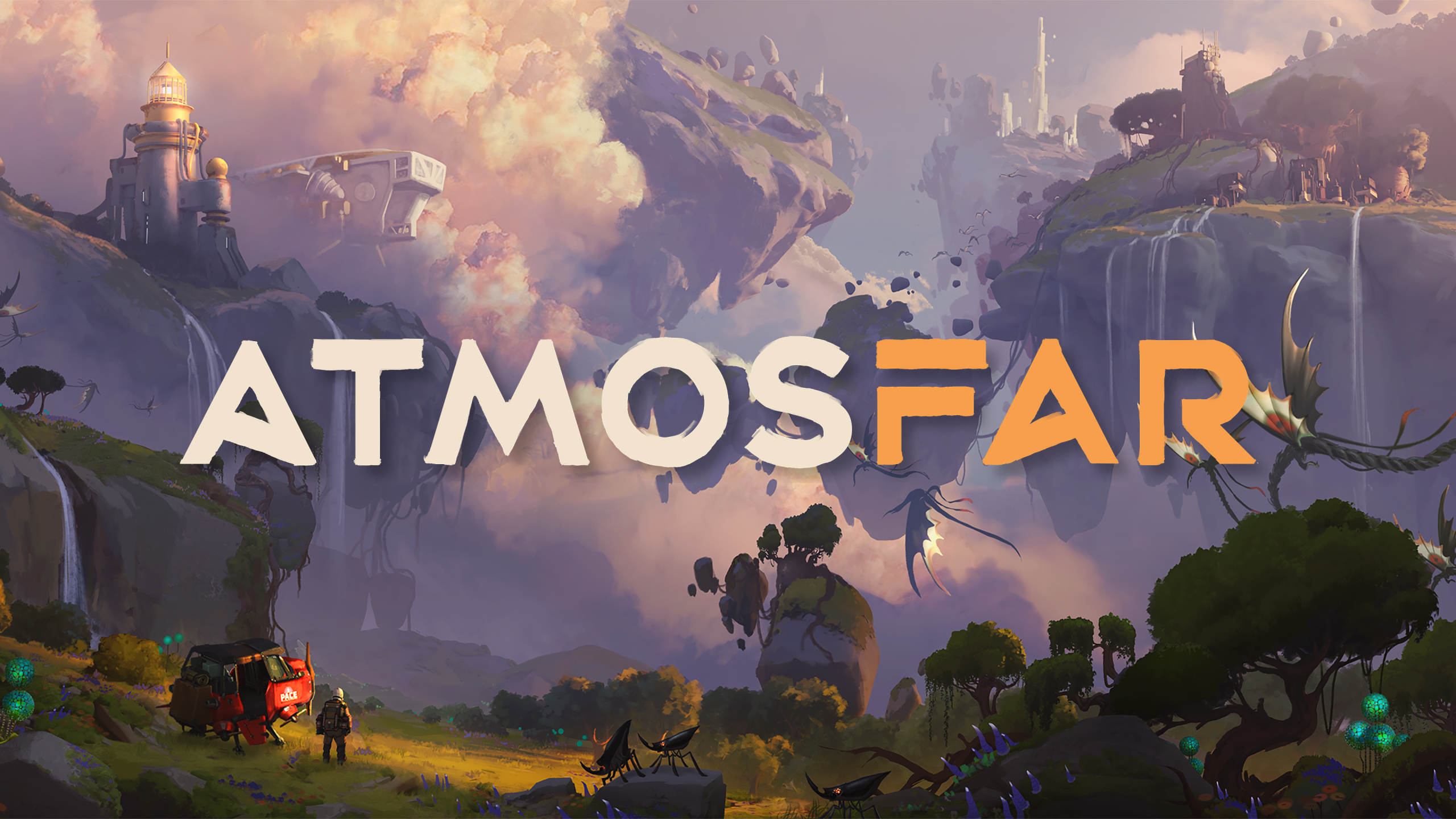
That arithmetic is the heart of this guide. ATMOSFAR, from the Swedish studio Apog Labs and publisher Shueisha Games, is a sci-fi survival-crafting game set on Tycos, an alien planet of floating islands, where you pilot small craft called Wasps from a larger mobile airbase called the Cloud Cruiser while uncovering what happened to humanity’s last outpost. It supports solo play and online co-op for up to four players, and it entered Early Access on PC on October 29, 2026. What makes it interesting from a tips perspective is how thoroughly its systems are tied together. Your backpack’s life-support unit powers both you and your tools. Your Wasp needs fuel and maintenance. Your Cruiser stores what you collect and develops what you build. Nothing in the loop is free, and nothing is independent of the rest.
I think of those dependencies as tethers, and the central skill the game seems to ask of you is simple to state and hard to practice: know the length of every tether before you fly. How long will your suit power last? How far will your fuel take you? How much weight can your craft carry? How long until nightfall? The players who thrive will be the ones who ask these questions before they leave, not after they are in trouble.

A Note on What Is Known and What Is Not
Because ATMOSFAR has only just entered Early Access, it is worth being clear about what this guide can and cannot say. The game’s documented design is public: the life-support system, the Wasp craft, the mobile Cloud Cruiser, the hazards, and the co-op structure have all been described by the developers and by early coverage. What has not been published includes exact recipes, resource quantities, repair costs, durability values, and combat numbers, and the Early Access build is explicitly smaller than the planned final game.
The developer’s roadmap describes a starting version with two floating-island regions, multiple biomes, three Wasps, and a fully fledged Cloud Cruiser, with later plans including a third region called The Rime, a Scout Wasp, expanded Cruiser building, and the story’s ending. Early Access is planned to last at least nine months and may be extended. That means everything here should be read as a framework for thinking, to be tested against the actual game, and the specific numbers you discover in play will matter more than any figure I could offer.
With that understood, the principles below follow directly from how the systems are described, and they should hold up even as the details change.
Three Questions Before You Leave
The most valuable habit you can build is a short pre-flight ritual. Before you leave the safety of the Cruiser, ask yourself three questions, and do not take off until you have answers.
The first is about your suit. Your backpack’s life-support unit is the system that keeps you alive and powers your tools, which means that every action that uses a tool draws from the same reserve that sustains you. That makes your suit power the shortest and most important tether you have. Before departing, check how much you have, think about what you plan to use it for, and decide how much you are willing to spend before you turn back.
The second is about your craft. Wasps need fuel, and they need maintenance and repairs. A craft that is low on fuel or in poor condition is a craft that limits where you can safely go. Ask yourself whether your tank can cover the outward trip, the time on the ground, and the return, with a margin for headwinds and detours. If the answer is uncertain, refuel or choose a shorter route.
The third is about the job. What are you actually trying to accomplish on this trip? Are you scouting a new island, hauling heavy scrap, collecting artifacts, or setting up a temporary camp? The answer determines which Wasp you should take, what supplies you should carry, and how long you should plan to be away. A trip without a clear purpose tends to become a trip without a clear end.
A few ways to make the ritual stick:
- Set a turnaround point before you leave. Decide in advance how much suit power or fuel remains when you head home, and honor it even when the temptation to push on is strong.
- Check the sky. Weather and time of day are among the documented hazards, so look before you go, not after.
- Pack for the job. Bring the supplies the trip actually requires, not an arbitrary pile of everything.
- Tell your squad. In co-op, announce your plan so that nobody is surprised by your absence or your return.
Choose the Wasp for the Job, Not the Island
One of the most distinctive features of the game is that your craft is not a generic vehicle. Wasps come in specialized types, each with its own abilities and aerodynamics, and choosing the right one for a task is part of the strategy. The roster named in official materials includes a Utility Wasp that can deploy a foldable camp, a Cargo Wasp built to lift heavy scrap, a combat-oriented craft associated with stunning enemies, and a Scout Wasp planned for a later update. The naming of the combat craft varies between sources, and the Early Access plan lists three Wasps at the start, so the final lineup may differ from what you see early on.
The principle that emerges is that the craft should match the task. A Cargo Wasp is the obvious choice for hauling heavy loads, but it may handle differently from a nimbler craft and could be a liability in a dangerous area where agility matters. A Utility Wasp that can set up a camp is ideal for extended expeditions where you need a temporary base, but it may not be the best choice for a quick in-and-out run. Treating your Wasp as a tool selected for a specific job, rather than a favorite you use for everything, will make your expeditions safer and more efficient.
Customization deepens this logic. The developers describe the ability to swap engine parts, hover sections, and hulls, and to apply paint jobs, with artifacts used to upgrade flying-vessel parts. Those upgrades presumably change how a craft performs, which means that investing in the parts that matter for your preferred style of play is worth planning rather than leaving to chance.
A few guidelines for choosing and tuning your craft:
- Match the Wasp to the mission. Haul with the hauler, camp with the camper, and scout with the scout when it arrives.
- Learn each craft’s handling. Differences in aerodynamics mean that a craft you know well will serve you better in bad weather than one you have barely tried.
- Keep spares in mind. If your preferred craft is damaged, having a backup option on the Cruiser keeps an expedition from becoming a stranding.
- Upgrade with purpose. Spend artifacts on improvements that address a real limitation, not on whatever looks interesting.
Scrap and Artifacts: Two Economies, Two Kinds of Detour
The documented progression loop revolves around two kinds of find. Scrap can be extracted from the environment and converted into reusable parts for items, which feeds the crafting of fuel, consumables, and equipment. Artifacts are a separate resource, described as the material used to upgrade parts and sections of your flying vessels. Understanding the difference between them shapes how you plan an expedition.
Scrap is the everyday currency. It keeps you supplied and flying, and it is the reason a Cargo Wasp exists. Because heavy scrap is something you carry, the weight of your haul becomes a variable. A trip that gathers a lot of scrap may leave you slower, more vulnerable, and more dependent on fuel, so you will need to balance greed against safety.
Artifacts are the long-term investment. They improve what you have rather than replenishing what you use, which makes them valuable even when they are not obviously useful in the moment. A trip that returns with an artifact has advanced your capabilities permanently, while a trip that returns with scrap has extended your ability to keep going. Both matter, but they serve different goals, and a healthy expedition plan includes some of each.
The practical consequence is that exploration pays in more than one way. An island that does not contain the thing you were looking for may still contain scrap or an artifact worth the detour, and a willingness to look beyond the obvious destination is rewarded. At the same time, every detour costs fuel and suit power, so the question is always whether the potential find justifies the length of the tether you are extending to reach it.
Some habits that follow:

- Prioritize artifacts when they are within reach. They make future trips safer and more productive.
- Be disciplined about scrap. Collect what you need and can carry, and resist the urge to overload your craft.
- Revisit islands strategically. Resources and conditions may change, and a second visit with a better-suited craft can pay off.
- Keep a mental list of unexplored spots. Knowing where you have not looked helps you plan efficient trips.
Treat Suit Power as a Clock, Not a Bar
It is easy to look at a resource meter and treat it as a number to watch. In ATMOSFAR, the life-support reserve is more usefully thought of as a clock, because it is both the thing keeping you alive and the thing powering your tools. Every moment you spend using a tool is a moment you are spending survival time, and the game seems designed to make you feel that trade-off.
The documented emphasis is on life-support power rather than a conventional hunger-and-thirst system, which means your attention is directed at a single, unified resource instead of a collection of separate meters. That simplicity is deceptive. It means that decisions about tool use, travel time, and risk all draw on the same pool, and that mistakes compound quickly.
A few implications follow. Use tools deliberately, not idly. If you need to extract scrap, plan your sequence so you do the essential work first, rather than wasting power on tasks that can wait. Return to the Cruiser to recharge or resupply before your reserve gets dangerously low, not after. And when you are in a tight spot, remember that conserving power is often a better strategy than pushing through, because a character with a little power left can still make it home.
The same logic applies to supplies. Crafted consumables are a buffer against the unexpected, and carrying a modest reserve of them is cheap insurance. The goal is not to hoard, which adds weight and wastes resources, but to carry enough that a surprise does not become a disaster.
Read the Sky Before It Reads You
The hazards named in official materials give a clear picture of what the world will throw at you. Alien plants and creatures, drones, nightfall, strong winds, jet streams, and rainstorms are all described as dangers, and several of them directly affect flight. Strong winds and jet streams make piloting a survival skill, and rainstorms can turn a routine journey into a situation that demands preparation. The developers have not published a weather forecast interface or specific damage numbers, so the best approach is to treat the sky as an active participant in your expeditions.
The first rule is to avoid being caught out by the clock. Nightfall changes the character of the world, and flying or exploring in the dark is likely to be riskier than doing so in daylight. Plan your trips so that you start early, finish early, and are heading home well before darkness arrives. If you must travel at night, do so with a clear purpose and extra caution.
The second rule is to respect the wind. Winds and jet streams can help or hinder you, depending on your direction. A tailwind can extend your range, while a headwind can drain your fuel faster than expected. Before committing to a long flight, consider which way the air is moving and plan your route accordingly. A route that looks efficient on a map may be a trap in practice.
The third rule is to retreat early. Storms and hostile encounters are easier to survive when you leave before they escalate. A player who turns back at the first sign of trouble has options. A player who waits until the situation is critical has none.
A few weather habits worth building:
- Check conditions before takeoff. A few seconds of observation can prevent a disaster.
- Plan around daylight. Start early, and keep a firm return time.
- Use the wind. Let favorable currents extend your range and avoid fighting strong headwinds.
- Carry a margin. Fuel and suit power should always include a buffer for the unexpected.
- Retreat without shame. Returning home early is not failure. It is how you get to fly again.
The Cloud Cruiser Is a Home That Leaves With You
The mobile airbase is the design choice that most clearly separates ATMOSFAR from conventional survival games. Instead of choosing a place to build a permanent home, you develop a base that travels with you. The Cloud Cruiser can carry Wasps and their fuel, provide storage for scrap and craftables, support crop growing and harvesting, and be expanded with new sections, and Steam describes a hangar and lounge as part of the experience.
This changes the strategic question. In a typical survival game, you ask where to settle. In ATMOSFAR, you ask how to develop the home you are always carrying. The Cruiser is both your staging point and your reward, the place where your expeditions begin and end and where the results of your labor accumulate. Keeping it organized, supplied, and upgraded is therefore a core part of the game, not a side activity.
A few principles for managing a mobile base:
- Keep the hangar stocked. A Cruiser with fuel and spare parts is a Cruiser that supports ambitious trips.
- Use the crops. Growing and harvesting on board offers a sustainable supply that reduces your dependence on risky expeditions.
- Expand with intent. Add sections that solve real problems, such as storage constraints or maintenance bottlenecks, rather than expanding for its own sake.
- Choose your position carefully. Where you park the Cruiser affects the length of your tethers, so place it near the resources you want to reach.
- Treat it as a team project. In co-op, the Cruiser is a shared construction effort, and coordinating who builds and maintains what prevents duplication and gaps.
The mobility of the base is also a safety net. If an area becomes too dangerous or too depleted, you can move on. That flexibility makes the world feel less like a series of fixed locations and more like a landscape you can navigate on your own terms.
Flying Together: Co-op Tips
ATMOSFAR supports online co-op for up to four players, with features described in official materials that include shared camps, riding in another player’s Wasp, flying in formation, and working together on the Cruiser. That variety suggests that cooperation is meant to go beyond simply being in the same world, and the best groups will probably be the ones that divide responsibilities thoughtfully.
The simplest approach is to assign roles. One player might focus on piloting and scouting, another on hauling and logistics, another on crafting and base maintenance, and another on defense and support. Roles do not have to be fixed, but having a rough division of labor prevents the common failure mode in which everyone does the same thing and nobody handles the essential tasks.

Communication matters even more in the air than on the ground. When players are scattered across islands, a short update about fuel, suit power, or an approaching storm can prevent a cascade of problems. Agree on simple signals for retreat and regrouping, and honor them without argument.
Co-op also changes the tether calculation. A group can pool resources and cover for one another, which means that a player with low fuel can hitch a ride, and a damaged craft does not have to mean a stranded pilot. Use that safety net, but do not rely on it. A team of four self-sufficient pilots is far more capable than a team of one self-sufficient pilot and three dependents.
A few co-op habits worth cultivating:
- Assign roles, but stay flexible. Specialization is efficient, and adaptability keeps you resilient.
- Share your plan. Let teammates know where you are going and when you expect to return.
- Fly in formation when it matters. Staying together in dangerous areas lets you support one another.
- Pool supplies wisely. Shared storage on the Cruiser makes it easy to redistribute resources where they are needed.
- Debrief after trips. A quick conversation about what worked and what did not improves every subsequent expedition.
Playing an Early Access Game Well
It is worth saying a few words about the experience of playing a game that is still being built. ATMOSFAR’s opening version is explicitly smaller than the planned final game, and the developers have said that Early Access will last at least nine months and could be extended. They have also said that there will be a slight price increase before the full release.
For players, that has practical implications. Expect change: systems may be rebalanced, features may be added or revised, and the best strategy today may not be the best strategy in a few months. Do not over-invest in optimizing around a specific number or recipe that may change. Instead, focus on the underlying principles, such as managing your tethers, matching your craft to the job, and keeping your base in good order, which are likely to remain relevant.
Treat bugs and rough edges as part of the experience, and report them where you can. Early Access games improve through player feedback, and a thoughtful report is more valuable than a complaint. Be patient with unfinished content, and appreciate the chance to see a game grow.
Finally, enjoy the sense of discovery. A world that is still being built has a special quality, and the early days of a game’s life are when its community forms and its identity takes shape. Being part of that is one of the real pleasures of Early Access.
The Mistakes Almost Everyone Will Make
Most early errors in a game like this will not be about mechanics. They will be about judgment, specifically the tendency to overextend. Here are the mistakes most likely to catch new pilots:
- Flying without a turnaround point. If you do not decide when to go home, the game will decide for you.
- Ignoring the weather and the clock. Nightfall, storms, and winds are real hazards, and they punish carelessness.
- Using the wrong craft. A Wasp built for hauling is not a scout, and a scout is not a freight carrier.
- Wasting suit power. Idle tool use drains the reserve that keeps you alive.
- Overloading with scrap. Greed makes you slower, heavier, and more vulnerable.
- Neglecting maintenance. A craft in poor condition is a craft that will fail at the worst moment.
- Leaving the Cruiser disorganized. A cluttered, understocked base makes every expedition harder.
- Going it alone in co-op. Teammates are a resource, and ignoring them wastes it.
The Quiet Pleasure of Making It Home
It would be easy to treat all of this as a set of constraints, a list of ways the game limits your freedom. That would miss the point. The reason to think carefully about tethers is not to restrict yourself but to expand what you can safely attempt. A pilot who knows exactly how far they can go can fly right up to the edge of that range with confidence, and the edge of the range is where the best discoveries tend to be.
There is a particular satisfaction in a well-judged expedition. You plan the trip, pick the right craft, fly out with a clear purpose, find what you came for, and turn back at precisely the moment you had decided in advance. The Cruiser appears on the horizon, your fuel gauge is low but not empty, your suit has a little power to spare, and the haul in your hold will keep your home running for days. Nothing dramatic happened, and that is the point. The drama was avoided because you did the arithmetic.
So before your next flight, take a moment to look at your gauges and ask the questions this guide has been circling: how long are my tethers, and what will I need to make it home? Answer honestly, set your turnaround point, and then go as far as the numbers allow. The sky is vast, the islands are waiting, and the best stories in ATMOSFAR will belong to the people who knew when to turn around.