
Fart Together: How to Coordinate Raft Steering Through Tight Obstacles

A shared raft turns a simple steering mistake into a group problem. One player wants to straighten the approach, another wants to build speed, and a third reacts to the first movement before the original correction has finished. The result can look like bad luck, but the useful question is usually more specific: which input changed the raft's movement, and why did the next player answer it that way? This guide concentrates on that single aspect of Fart Together: coordinating propulsion and steering so your group can approach, pass through, and recover from tight obstacles with a repeatable plan. The aim is to replace overlapping reactions with short decisions that everyone can understand while the raft is moving.
GamesMrkt describes Fart Together as a physics-based cooperative obstacle-course game for two to four players, with a shared raft affected by each player's force, direction, and timing. Narrow passages, sharp turns, and moving hazards are part of that premise. As checked on November 6, 2026, the demo is available and the main Steam listing says the full game is coming soon. The procedures below are proposed practice methods inferred from that documented premise, not developer-issued techniques or claims of hands-on testing. Read the controls in your installed build, and treat the example calls, practice targets, and maneuver sequences as a framework to test. No exact key bindings, hidden statistics, braking values, or undocumented abilities are assumed.
Source basis: Confirmed game details and availability come from the official main Steam listing and official demo listing. The coaching framework, hypothetical situations, and practice exercises are original recommendations. Here, “release” means stop adding your own propulsion input; it does not mean the raft instantly stops.
1. Establish a Shared Direction System Before the First Attempt
Make every steering call refer to the same thing
Before tackling a narrow opening, agree on what your team means by a direction. A shouted “left” is incomplete if one person interprets it relative to their character, another relative to the raft, and another relative to what appears on their screen. Instead, name a visible destination and describe the movement you want the raft to make toward it. “Toward the opening” is more useful than “forward” when the group has not established a common reference. For a practice stretch, choose one recognizable feature at the far end as the destination, then identify the two boundaries around it. If different players see different perspectives, use those shared landmarks instead of assuming everyone's screen directions match. The point is to remove a translation step during the moment when timing matters. You should be able to ask any teammate what a call means and receive the same description of the intended raft movement. If that agreement is missing, the group is not ready to judge anyone's execution.
Separate the intended result from the required input
Next, distinguish a movement instruction from a button instruction. “Move toward the gap” describes an outcome; it does not prove that every player should use an identical directional input. The game's documented premise tells us that individual contributions influence the shared raft, but it does not establish a universal mapping that this guide can safely prescribe. Use the controls displayed in your build, then observe what your own action does. If an input changes facing, orientation, or propulsion direction, learn that relationship in a forgiving area before asking the team to perform it next to an edge. This also prevents misleading arguments after a collision. A player may have followed a familiar button habit while producing the opposite of the requested movement. Describe that as a mapping problem and test it. Repeating the command more loudly will not correct a disagreement about what the command actually requires. Keep the destination visible, use a small action, and compare intention with result.
Use a tiny vocabulary that the whole group can repeat
Build a starting vocabulary around four ideas: prepare, act, release, and reassess. “Prepare” identifies the intended maneuver without authorizing anyone to begin. “Act” is the agreed execution cue. “Release” tells everyone to stop adding the named input. “Reassess” means the original plan is no longer reliable and the caller will describe a new one. These are suggested voice conventions, not in-game functions. Choose shorter words if your friends prefer them, but retain the distinctions. In particular, do not use “stop” ambiguously for both releasing propulsion and demanding that all raft motion disappear. A useful rehearsal is to describe one imaginary crossing while nobody moves: identify the destination, name who will contribute, give the execution cue, and end the input. Each player then explains their part. This takes little time and reveals whether a supposedly obvious instruction contains an assumption. Once the group can rehearse a maneuver consistently, begin testing it in the game.
- Name the destination before giving a direction.
- Agree whether a call describes raft movement or a specific player action.
- Keep preparation, execution, and release as separate calls.
- Resolve unclear wording before entering a tight passage.
2. Calibrate One Player's Contribution in a Forgiving Area
Learn the response before combining inputs
Your first practical exercise should isolate one contributor. Where the course gives you enough room to experiment, ask everyone except one player to refrain from adding propulsion. Have that player make a brief input using the game's actual controls, then release it. Watch the raft rather than the character's animation alone. Did the action move the raft toward the chosen destination, shift it across the approach, change its orientation, or produce a combination? Does movement visibly continue after release? Those observations are more valuable than guessing at the underlying physics. You do not need to calculate a force value, and you should not assume the simulation behaves exactly like a real boat. What matters is a usable relationship between an action and a visible result in the current situation. Repeat a modest action from a comparable starting state, then compare the outcome. If the result differs, inspect what changed before deciding the controls are random.
Give every teammate the same learning opportunity
Rotate through the team so that each person learns what their own contribution looks like. Do not appoint the most experienced player as the permanent demonstration pilot while everyone else watches passively. The person who rarely contributes during practice may later apply an unfamiliar input when pressure rises. Keep each trial simple: begin from a manageable state, state the intended direction, perform one small action, and observe after releasing. If players change positions or the raft begins from a different orientation, record that as a changed condition rather than assuming the original observation still applies unchanged. This guide does not claim that position always alters steering authority; it recommends checking the situation you actually have. The group should leave calibration able to distinguish a brief nudge from a longer push in practical terms. Those descriptions can remain qualitative. “That carried us farther than we expected” is enough to justify trying a smaller contribution on the next attempt.
Define a pulse as a team convention, not a hidden mechanic
For the rest of this guide, a “pulse” means one deliberately brief propulsion input followed by observation. It is a coaching term, not a claim that the game has a special pulse button or fixed impulse system. Pick a duration that your teammates can reproduce reasonably well with their controls. Avoid pretending that a stopwatch-perfect number will work for every group, route, or build. Your first objective is consistency at low pressure. Compare two or three similar trials and ask whether the raft stays within a comfortable practice area. If not, make the action smaller or begin from a calmer starting state. Also test what merely releasing input achieves. If the raft continues moving, everyone must understand that release is not an emergency brake. If it settles quickly under the current conditions, do not automatically assume the same response at a different speed or after a collision. Calibration should produce observations with context, not sweeping rules about the entire game.
- Test one contributor at a time.
- Watch translation, orientation, and motion after release.
- Repeat from comparable starting conditions.
- Use observed results to choose the size of the next action.
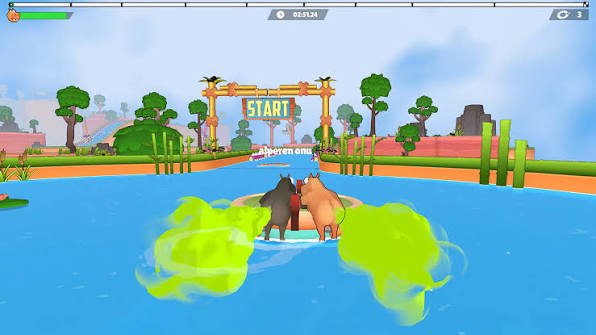
3. Assign a Caller and Limit Unplanned Corrections
Give decisions a clear owner during each maneuver
Once individual inputs make sense, decide who coordinates the next obstacle. One caller should describe the intended route and authorize the planned contributions. This does not mean one person is always right or everyone else must remain silent. It means the group avoids executing several different solutions at once. Other players can report what they see, especially a boundary the caller has missed, but a report should not automatically become an unannounced steering action. “We are getting close to the right side” gives the caller information. “I corrected it” announces an intervention after the movement has already changed. During practice, favor the first behavior. Rotate the caller between attempts so that every teammate develops a sense of how instructions affect the raft. Choose the person with a useful view and a clear plan for the current obstacle, rather than assuming the strongest individual player must always direct the group.
Distribute responsibilities without inventing fixed character roles
Use temporary responsibilities that match your group size. With two players, one can call the maneuver while the other confirms the threat nearest the raft. Both may contribute propulsion when requested. With three or four players, one teammate can watch the next opening while another pays attention to the raft's clearance at the current obstacle. These are observational jobs, not special character classes or guaranteed steering positions. Do not assign someone permanently to “braking” unless your own testing has established a reliable way for that person to reduce unwanted movement. Instead, name specific actions: one player contributes the tested correction, two others provide the agreed crossing push, and everyone releases on the same cue. The exact arrangement should come from calibration. Additional players create additional opportunities for useful information, but also more opportunities for conflicting inputs. A larger group benefits from explicit participation rules because silence otherwise gets mistaken for agreement.
Make emergency information brief and actionable
Agree on how anyone can interrupt an unsafe plan. A short call such as “edge right” should identify both the hazard and its location using the team's shared reference. The caller can then abandon the original maneuver and name a recovery action. If danger is immediate and your group permits an individual emergency correction, define that exception in advance and require the player to announce it as they act. The aim is not to forbid quick reactions; it is to make those reactions legible to everyone else. Otherwise, a rescue attempt becomes the first of several opposing rescue attempts. Practice a false-alarm drill in a forgiving stretch: the observer reports a threat, the caller cancels the next push, and the group returns to observation. You are rehearsing how to interrupt momentum in the conversation, even when the raft itself does not instantly stop. A team that can cancel a plan clearly is better prepared to recognize when the next input needs to change.
- Use one caller for the current maneuver.
- Let observers report hazards without automatically adding thrust.
- Name which players are contributing before the cue.
- Agree how urgent information interrupts the plan.
4. Build a Repeatable Approach Before Entering a Narrow Passage
Choose a useful starting state outside the restriction
A tight passage becomes harder when the raft arrives with an uncertain direction or more movement than the team knows how to manage. Before entering, look for the last available stretch where you can adjust your approach without immediately touching a boundary. Treat that stretch as preparation space. Your objective there is not necessarily complete stillness; it is a state the team understands well enough to predict the next action. Identify the opening, inspect the raft's present movement relative to it, and decide whether you need a small adjustment before committing. If the raft is already moving across the desired path, a visually centered position may not last. Watch how its position changes over a short interval instead of judging a single frame. Similarly, an awkward orientation may matter if it changes how much of the raft occupies the opening. Observe the actual geometry and avoid assuming that the center alone determines clearance.
Plan the exit before planning the entry
Look beyond the near edge of the passage. Where will the raft go if the crossing succeeds? A clear opening can still deliver the group into a turn, a boundary, or another hazard with little room to react. Choose an exit area that gives you space for the next decision, then work backward to a sensible entry line. In a hypothetical straight slot with open space beyond, that might mean keeping the approach simple and avoiding unnecessary steering during the crossing. If the exit immediately bends, the priority might instead be a slower, more deliberate entry that preserves room to adjust afterward. These are geometric judgments, not claims about a particular named level. The same visible opening can demand different inputs depending on the movement you bring into it. Explain the plan as a sequence: reach the approach area, make the alignment adjustment, cross, and release or reassess once the raft clears. That gives every teammate a reason for the chosen pace.
Use an entry check that takes only a moment
Before authorizing the crossing, check three things aloud: the destination is agreed, the raft's current movement is acceptable, and the contributors know their jobs. If one of those conditions is missing, do not compensate by shouting a countdown sooner. Correct the missing information while there is still room. Avoid overcomplicating the check with a long speech that becomes outdated while the raft moves. A concise call such as “opening ahead, drifting slightly across, one adjustment first” communicates both the target and the immediate issue. Once the adjustment has had time to show its effect, the caller can authorize the crossing. If the result differs from the prediction, return to observation instead of forcing the original plan. This is how you make approaches repeatable: keep the preparation conditions similar enough that a successful maneuver teaches you something. Repeatedly arriving at different speeds and angles makes every attempt a new problem, even when the obstacle itself has not changed.
- Identify the last useful preparation area.
- Observe movement as well as position.
- Choose an exit with room for the next decision.
- Commit only after the group agrees on the immediate action.
5. Cross Tight Gaps with Short, Observable Steering Decisions
Use feedback between corrections
Inside a narrow passage, the team has less space to absorb an incorrect adjustment. Use the smallest tested contribution that appears sufficient for the situation, then observe its result before adding another. This does not mean every gap should be crossed at the slowest possible speed or with repeated tiny stops. Some situations may reward a continuous, committed movement. It means you should avoid piling a new steering correction onto an earlier one whose effect you have not yet understood. A useful practice sequence is to make the entry adjustment outside the gap, authorize the crossing contribution, and reserve additional steering for a visible need. If the raft follows the intended path, allow the successful action to remain successful. Teammates often create a problem by trying to improve an approach that already has enough clearance. Your standard should be a reliable crossing with room for error, not a cosmetically perfect line that demands constant interference.
Watch the nearest threatened boundary and the remaining clearance
Have the observer report the boundary that matters most right now. If the raft is approaching one side of the passage, a useful report describes whether that clearance is shrinking, staying similar, or growing. This provides more information than repeatedly saying the side's name. “Right clearance shrinking” indicates a trend; “right” could mean move right, avoid right, or inspect the right side. The caller should translate the report into a tested action with an identified contributor. Consider a hypothetical crossing where a small deviation appears halfway through. Rather than asking everyone to fix it, select the contributor whose earlier calibration produced the needed adjustment. Let the others maintain or release their planned inputs as instructed. After the correction, reassess the trend. If the boundary is no longer approaching, do not keep applying the same correction simply because the raft has not returned to the visual center. Safety depends on future clearance, not symmetry.
End the crossing before starting the celebration
Keep the plan active until the whole raft has cleared the restrictive area. The front reaching open space does not necessarily mean the remaining footprint has cleared the sides. If the group adds a celebratory burst or begins a turn too early, the final part of the crossing can become the collision point. Have the observer confirm clearance using the geometry actually visible, then let the caller transition to the next maneuver. Where visibility is poor, use a more conservative exit rather than assuming clearance from a partial view. Review a failed gap in terms of when the path first became unsafe: before entry, during a correction, or during the exit transition. Each diagnosis suggests a different fix. A bad approach calls for earlier preparation; an excessive adjustment calls for a smaller or better-coordinated contribution; an exit collision calls for patience before the next maneuver. Treating all three as “we need better aim” hides the decision that actually needs practice.
- Make major alignment changes before the tightest point when possible.
- Allow time to see what each correction accomplishes.
- Report whether clearance is improving or worsening.
- Confirm that the full raft has cleared before changing the plan.
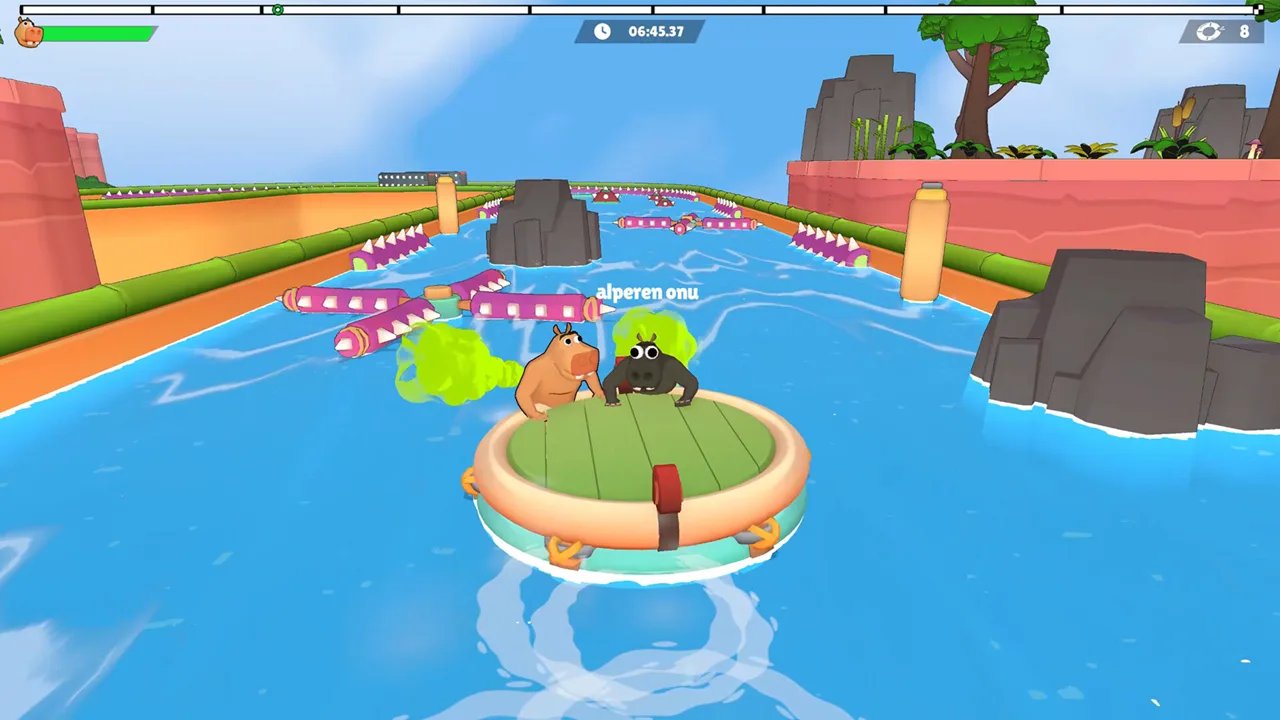
6. Handle Sharp Turns by Separating Preparation, Redirection, and Exit
Start solving the turn before reaching its tightest point
A sharp turn asks the group to change its intended path while respecting the movement the raft already has. Begin by identifying where the route changes and how much room exists around that change. If your current approach would carry the raft into the outside boundary, simply aiming the next input along the exit does not guarantee an immediate change in travel. Use the observations from calibration to decide how early you need to stop adding the previous contribution or begin a tested adjustment. Do not assume that releasing propulsion removes existing motion, and do not invent a reverse-thrust brake without testing how the controls respond. The preparation question is practical: can the team arrive at the turning area in a state that allows the intended redirection? If not, revise the preceding stretch. Many apparent turning failures begin well before the corner, when the group commits to an approach it cannot comfortably alter within the remaining space.
Give the turn and the exit separate cues
Break the maneuver into two decisions after preparation: redirect the raft, then establish movement through the exit. These decisions may happen close together, but separating them in your communication reduces the chance that one player accelerates toward the exit while another is still correcting the approach. Before trying the turn, name a visible point or region that represents a successful redirection. It might be a clear path into the next stretch, with enough room on both sides to continue. Do not insist on a particular raft orientation unless your own observations show that it matters for clearance or control. Once the caller sees the required condition, authorize the exit contribution. If the condition has not appeared, avoid advancing the sequence merely because the expected amount of time has passed. This is a visual decision rather than a memorized countdown. Your team is learning to respond to the raft's actual state, including any variation introduced by earlier movement.
Diagnose the turn by its first failed phase
After a failed turn, ask whether the problem was preparation, redirection, or exit. Suppose the raft reaches the corner with a strong sideways trend toward the outer boundary. That suggests changing the approach before enlarging the turning input. Suppose instead that the raft reaches a manageable position, but several teammates make overlapping corrections and send it across the intended line. That suggests simplifying contributors and reducing the adjustment. Finally, suppose the turn itself clears comfortably, but an immediate push sends the raft into the next restriction. That suggests a premature exit action. These hypothetical examples show why adding more force is an incomplete response to failure. Change only the phase that first lost control, then try again from comparable conditions. A successful turn should leave the group able to describe what made it work. “We got lucky” can be an honest observation once; it should become a prompt to identify a repeatable entry and exit rather than the team's permanent explanation.
- Prepare the approach while there is still room to change it.
- Use a tested adjustment to redirect the path.
- Authorize the exit contribution only when the route is actually clear.
- Fix the first failed phase instead of changing every input.
7. Time Moving Obstacles from a Safe Approach State
Observe the hazard before committing the raft
A moving obstacle adds a timing problem to the steering problem. Before committing, observe whether its movement is predictable enough to support a plan. If it repeats, watch more than a single pass when the course gives you a safe opportunity. Identify the space it occupies, the direction it travels, and when the intended crossing becomes available. Do not assume every moving hazard has a fixed cycle or that an apparently open moment lasts long enough for the whole raft. Your useful observation is not merely “the opening exists,” but “the opening remains available long enough for our approach and clearance under these conditions.” If you cannot judge that confidently, approach more cautiously or look for a better observation position where one is available. Avoid drifting into the danger area while the team debates timing. A waiting plan must account for the raft's actual movement, not just the fact that nobody currently intends to cross.
Include the approach and the rear of the raft in the timing decision
Think through three stages: reaching the danger area, moving through it, and clearing it completely. The moment a hazard moves away may be too early or too late for your current distance and movement. A countdown that works from one starting position may fail from another because the raft reaches the crossing at a different moment. First establish a repeatable approach state, then choose a visible cue that the caller can recognize. For a hypothetical obstacle sweeping across a lane, the cue might relate to the obstacle leaving that lane, provided observation shows enough room to cross. This is an example of reasoning from visible movement, not a claimed solution to a specific course. State which players contribute, what the execution cue is, and when the group will release or reassess. Teammates should prepare before the cue arrives so that the caller is not explaining the plan during the usable opening.
Define when to abandon a missed window
Give the group permission to skip an opening if preparation is incomplete. A late start often becomes more dangerous when players try to rescue the timing with an unplanned stronger push. If someone misses the execution cue, the correct response depends on the raft's position and the hazard, but it should begin with a clear report rather than a silent catch-up input. Before entry, the caller may be able to cancel and wait for another opportunity. Once the raft is committed, the group may need a specific recovery decision based on what is actually visible. Do not promise that either option is always available. The important habit is recognizing when the original timing assumption no longer holds. After a failure, determine whether the cue was wrong, the approach state changed, or the team executed unevenly. Practice the actual source of variation. A predictable obstacle can still produce inconsistent outcomes when your own departure point changes on every attempt.
- Observe whether the hazard's movement repeats.
- Choose a waiting position only if it is genuinely manageable.
- Time the complete crossing, including full raft clearance.
- Cancel an unprepared attempt before entry when circumstances allow.
8. Recover from Drift or Contact Without Stacking Rescue Inputs
Replace the outdated plan with an immediate observation
Unexpected drift or contact changes the problem the team is solving. The planned push that made sense a moment earlier may now worsen the situation. Call out the disruption and assess what the raft is doing before automatically repeating the original maneuver. Is the nearest boundary getting closer? Has the raft changed orientation? Is the intended exit still reachable with visible clearance? The answers determine the recovery objective. Start with the most urgent threat and state a concrete aim, such as increasing distance from the threatened side or avoiding another contribution toward it. If stopping additional propulsion is appropriate, call release, while remembering that release may leave existing motion. Do not let the familiar word create a false expectation of instant stability. A useful recovery begins by aligning everyone's understanding of the new state. Otherwise, one player may still be executing the crossing while another has already begun an escape attempt in a different direction.
Use the smallest plausible rescue that your testing supports
When there is room and time, choose one tested correction with an identified contributor, then watch its effect. The temptation to have everyone help is understandable, but simultaneous unplanned contributions make the result difficult to predict or diagnose. If the first adjustment improves clearance, allow it to work before asking for more. If it fails to improve the situation, the caller can revise the action using the new observation. This is not a promise that every dangerous state can be recovered through small inputs. Some situations may require a stronger coordinated action, and some may already be unrecoverable. The principle is to match the response to evidence instead of treating panic as a control method. A rescue should have an explicit desired result and a point at which the group stops adding that correction. Without that endpoint, the action that saves one side of the raft may create the next threat on the other side.
Practice recovery deliberately when the course permits it
Use a forgiving area to rehearse manageable deviations rather than learning every recovery beside a dangerous edge. Begin from a familiar state, introduce a modest change through one player's input, and have the caller identify the new trend. Then execute a single recovery decision and observe whether it improves the path. Keep the exercise within the space available; there is no value in manufacturing a major failure just to demonstrate that recovery is difficult. Rotate the observer so everyone learns to distinguish position from movement. A raft close to a boundary but moving away may need less intervention than one farther away and moving toward it. After a real failed attempt, discuss the earliest point at which someone could identify the threat. If the warning arrived late, work on observation and callouts. If the warning was early but the response became chaotic, work on contributor discipline. Those are different skills, and separating them makes practice more productive.
- Announce that the original plan no longer fits the situation.
- Identify the most immediate threat and its trend.
- Authorize a specific correction with a clear endpoint.
- Review whether detection or execution caused the recovery to fail.
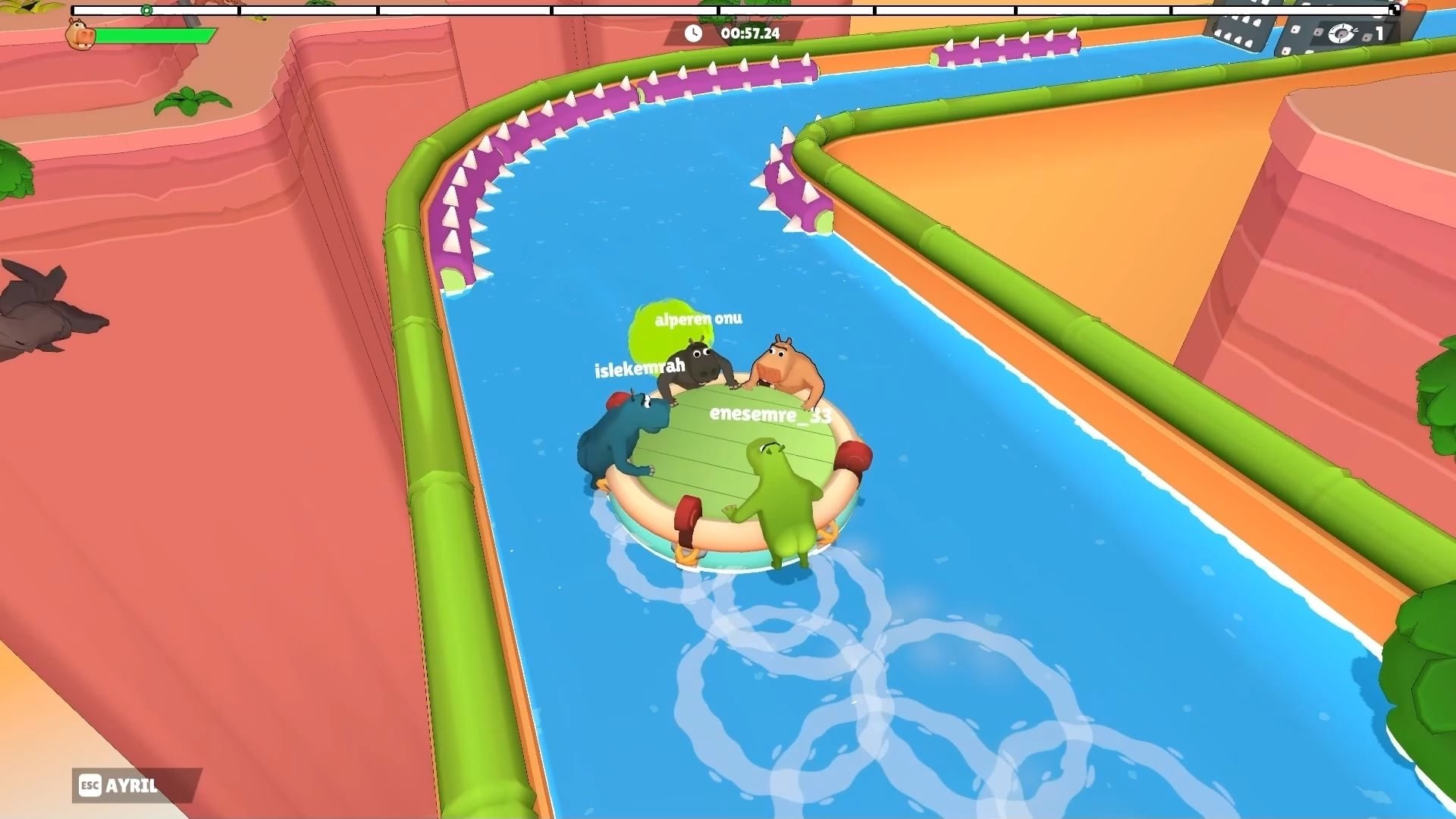
9. Connect Obstacles by Managing the State You Carry Forward
Judge success by the next approach as well as the current clearance
After learning individual maneuvers, connect them without losing the discipline that made them reliable. Clearing a gap is only part of the task if the raft immediately enters a turn or moving hazard. Ask what state each successful maneuver leaves behind: where the raft is, which way it is moving, how much room remains, and whether the team is ready for the next cue. An exit that technically avoids contact may still create an awkward next approach. When that happens, consider changing the earlier crossing rather than treating the following obstacle as an isolated failure. For example, a slightly more deliberate exit may leave enough room to assess the next hazard, while an enthusiastic extra push removes that opportunity. This is a hypothetical planning tradeoff, not a requirement to move slowly everywhere. Your aim is to preserve useful options. The best local action is the one that supports the next necessary decision as well as clearing the present restriction.
Use visible transition points to change responsibilities
Choose recognizable moments for switching from one maneuver to the next. A transition might be full clearance of a narrow area, arrival in a wider stretch, or a newly visible view of the upcoming hazard. These are team-selected reference points, not claims about checkpoint mechanics. At each transition, the caller briefly confirms the next objective and changes contributors if needed. Keep the announcement short enough to use while moving: the destination, the immediate concern, and the next action. If the observer who watched the rear clearance now needs to watch the next obstacle, make that handoff explicit. Otherwise, everyone may assume someone else is observing the new threat. The goal is continuity without unnecessary chatter. You should not need to repeat the entire route plan at every transition, but you should confirm any condition that changed. If the raft exits in a different state than expected, reassess before blindly continuing a remembered sequence.
Optimize one connection at a time
Once a sequence is reasonably reliable, improve the connection between two obstacles rather than trying to accelerate the whole route at once. Choose one change: an earlier preparation call, a cleaner exit line, fewer redundant corrections, or a better observation handoff. Keep the rest of the sequence similar so you can tell whether that change helped. Faster completion may follow from reduced confusion even if individual propulsion inputs remain modest. If a more aggressive connection produces frequent failures, compare the time saved with the additional retries instead of judging only the best attempt. A run that occasionally looks spectacular can be less effective than one the group repeats comfortably. Also avoid turning a successful sequence into a rigid script that ignores visible differences. Remember the conditions that made it work, not merely the order of words. Consistency comes from recognizing comparable situations and making appropriate decisions, rather than assuming that repetition guarantees the same result.
- Plan each exit with the following obstacle in mind.
- Use visible transitions to update the caller's plan.
- Explicitly hand observation duties to the next teammate.
- Improve one connection while keeping the rest comparable.
10. Turn Repeated Attempts into a Focused Raft-Control Practice Routine
Give each attempt one question to answer
Finish your practice progression by making every retry informative. Before starting, name one question: does an earlier release improve the approach, does one contributor produce a cleaner correction than several, or does a different observation cue improve timing? Select a question tied to the earliest problem in the previous attempt. Then keep unrelated choices as consistent as circumstances allow. If you change the caller, the input size, the approach line, and the timing cue together, success may feel good but teach you very little about why it happened. A failed attempt can still be useful if it clearly rules out an assumption. For example, discovering that a smaller correction is insufficient tells you something different from discovering that the correction was applied after the boundary was already too close. Keep that distinction in the discussion. You are not trying to produce a scientific measurement of the game's simulation; you are trying to build a shared understanding that improves the next decision.
Review causes with concrete observations
After each attempt, use a brief review built around expectation, observation, and change. The caller states what the maneuver was supposed to achieve. The observer describes what visibly happened. The group agrees on one adjustment for the next try. Replace personal accusations with specific events: two players acted after the release call, the approach began farther from the opening, or the team started the crossing before confirming readiness. Those descriptions lead directly to useful practice. Labels such as “bad timing” or “terrible steering” do not. If the group cannot agree on what happened, simplify the next attempt so fewer actions overlap. Where the game and your setup allow review of a recording, it may help resolve a disputed sequence, but recording is optional and not necessary for this method. The essential habit is separating what you saw from what you assumed. That keeps the discussion focused on an action the team can actually change.
Use a short progression and a clear stopping point
Organize a session into a few purposeful stages: refresh individual controls, rehearse the call sequence, practice the current troublesome maneuver, and then attempt a connected stretch. The following list is a suggested practice structure rather than an in-game mode. Spend more time where the group is learning and less time repeating a task it already understands. For a manageable milestone, aim for several comparable successful approaches before increasing ambition; the exact number is a team preference, not a hidden performance threshold. Stop or change the exercise when fatigue makes callouts harder to follow or the same unexamined mistake repeats. A short pause can restore attention more effectively than another frustrated launch. End by stating one thing the group now does reliably and one thing to test next time. That gives the next session a useful starting point. Progress in shared raft control should feel like fewer unexplained inputs, clearer recovery decisions, and more confidence about what the next action will accomplish.
- Refresh the relationship between your controls and the raft's visible response.
- Rehearse destination, contributor, execution, and release calls.
- Practice one difficult approach or crossing from comparable conditions.
- Review the earliest divergence from the plan and change one variable.
- Connect the maneuver to the following obstacle only after it becomes understandable.
Conclusion: Make Every Contribution Understandable
Coordinated raft steering in Fart Together begins with a shared understanding of what the next input is supposed to achieve. Establish a common reference for directions, test individual contributions, and let one caller organize each maneuver. Prepare outside tight spaces where possible, observe the effect of corrections, and account for the raft's entire passage through a restriction. When the route turns or a hazard moves, base the next cue on the state you can actually see. When something goes wrong, replace the old plan with a clear recovery objective instead of layering several rescue attempts on top of one another. These habits turn the game's shared-control premise into a practical learning process.
Your next useful goal is not a flawless full run. Choose one troublesome gap or turn and make the approach understandable enough that the team can explain both success and failure. Once that maneuver becomes repeatable, improve the exit it gives you and connect it to the next challenge. Keep the humor, but make the instructions precise: where the raft should go, who will contribute, when to act, and when to reassess. The result should be a group that needs fewer emergency guesses because everyone understands the movement they are trying to create together.